You found an interesting job. Your experience matches the requirements. You polished your CV, submitted the application, and waited.
Days passed. Then weeks. Still nothing.
Sound familiar?
According to a 2025 survey by The Stepstone Group, 64% of jobseekers in Germany have experienced being ghosted by employers.
But why does this happen? And what can you actually do to improve your chances of receiving a response?
1. You’re competing for attention, not just qualifications
Meeting the job requirements doesn’t guarantee an interview.
Recruiters compare candidates against each other, often while managing numerous applications. Even if you’re qualified, someone else might have more directly relevant experience.
Your CV therefore needs to communicate your value quickly.
What you can do
Focus on achievements rather than generic responsibilities.
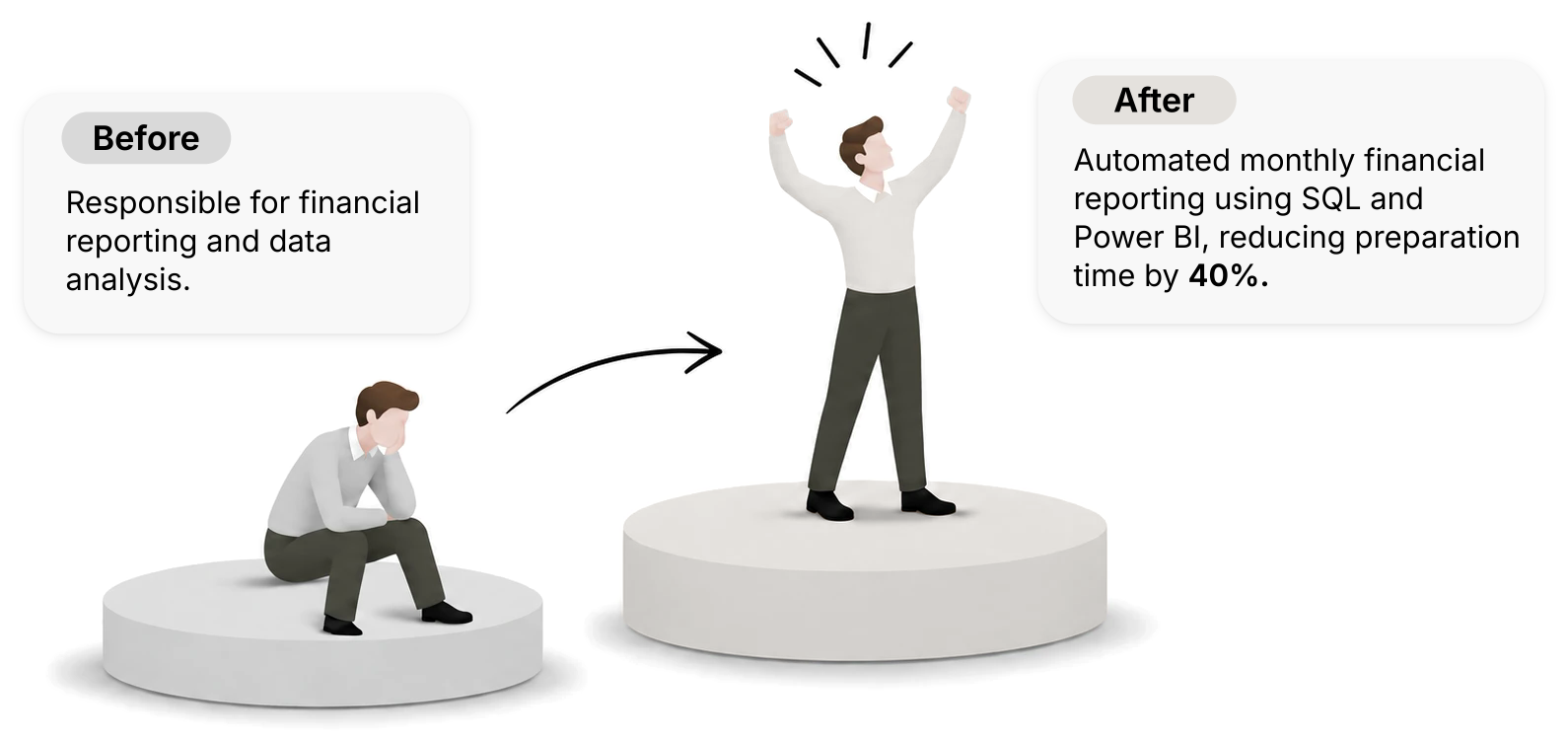
The second version demonstrates specific skills and measurable impact. Only use figures you can genuinely substantiate.
2. Your CV isn’t tailored to the opportunity
Two companies recruiting for the same job title may be looking for completely different strengths.
One might prioritize technical expertise, while another values stakeholder management.
Sending an identical CV to both companies can make relevant experience less visible.
What you can do
Identify the three to five most important requirements in the job description. Then make sure your existing qualifications, achievements, and skills clearly address them.
Tailoring doesn’t mean inventing experience. It means presenting your real experience in the most relevant way.
3. Your CV might be difficult to read
Recruiters need to understand your professional background without searching through dense paragraphs, confusing layouts, or unnecessary details.
Some employers also use applicant tracking systems (ATS) to organize and process applications. Complicated formatting can occasionally interfere with how information is extracted.
What you can do
Keep your CV clean and structured.
- Use recognizable headings such as Work Experience and Education.
- Prioritize relevant accomplishments.
- Maintain consistent formatting and readable typography.
- Include relevant keywords naturally, without repeating them excessively.
A professional CV should look appealing while making the important information easy to find.
4. Sometimes, the problem isn’t your application
Not every unanswered application indicates a weak CV.
Hiring budgets change. Vacancies get paused. Internal candidates receive priority. Recruiters become overwhelmed.
Some employers simply fail to communicate their decisions.
What you can do
Focus on opportunities where you meet the essential requirements. Check whether vacancies are still active, follow up professionally when appropriate, and track your applications.
Pay attention to patterns. If you’re consistently receiving interviews for certain positions but not others, review how you present your experience for those roles.
Remember: silence doesn’t necessarily mean you weren’t qualified.
Before you send your next application
Ask yourself four questions:

- Is it immediately clear why I’m suitable for this position?
- Have I demonstrated my achievements rather than just listed responsibilities?
- Is my CV professional, readable, and well-structured?
- Have I tailored it to the specific opportunity?
You can’t control every recruitment decision. But you can control how effectively you communicate your professional experience.
A stronger application doesn’t guarantee an interview. It gives your experience a better chance to be understood.